February 14, 2026 By Maria
Happy Chinese New Year! Gong hei fat choy! The Cantonese lunar new year greeting means, “May you be happy and prosperous.”
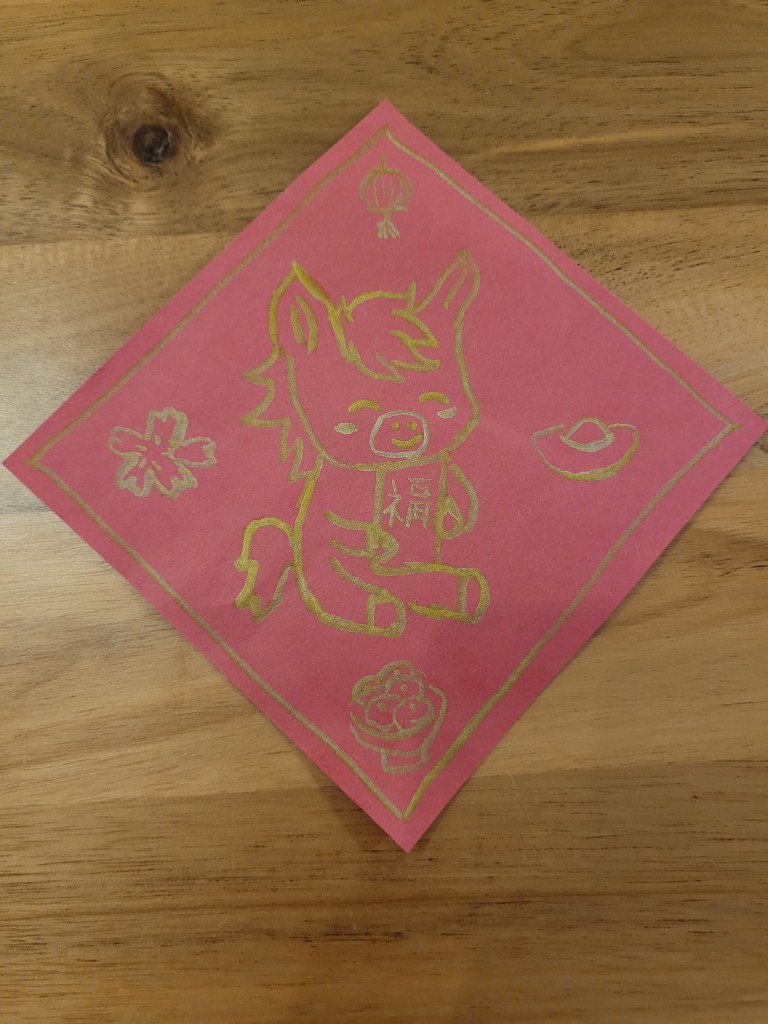
Chinese Lunar New Year begins on February 17th this year. Celebrations start with the new moon. Our Lunar New Year celebrations have changed and evolved over the years, but a meal with family is always at the center. In many ways the core of Lunar New Year and the Mid-Autumn Festival are very similar (I have written about the Mid-Autumn Festival in previous blog posts). Both holidays focus on family and togetherness and usually center on sharing a meal. Lunar New Year has a stronger focus on fortune and prosperity and good will for the new year. Many traditions for Lunar New Year also include driving away evil spirits and bad fortune and bringing in good fortune.
A couple of years ago, my mom and I put together a Lunar New Year display at the local library. I did a bit of research about how other Asian cultures celebrate the new year. It was fun and enlightening to learn the similarities and differences between new year celebrations. One difference was the amount of time spent celebrating. While China celebrates for 15 days, South Korea and Vietnam end their celebrations at 3 days. In Vietnam the Lunar New Year is called Tết and in South Korea it is called Seollal. Overall most traditions center around family and sharing good food and wishes of fortune.
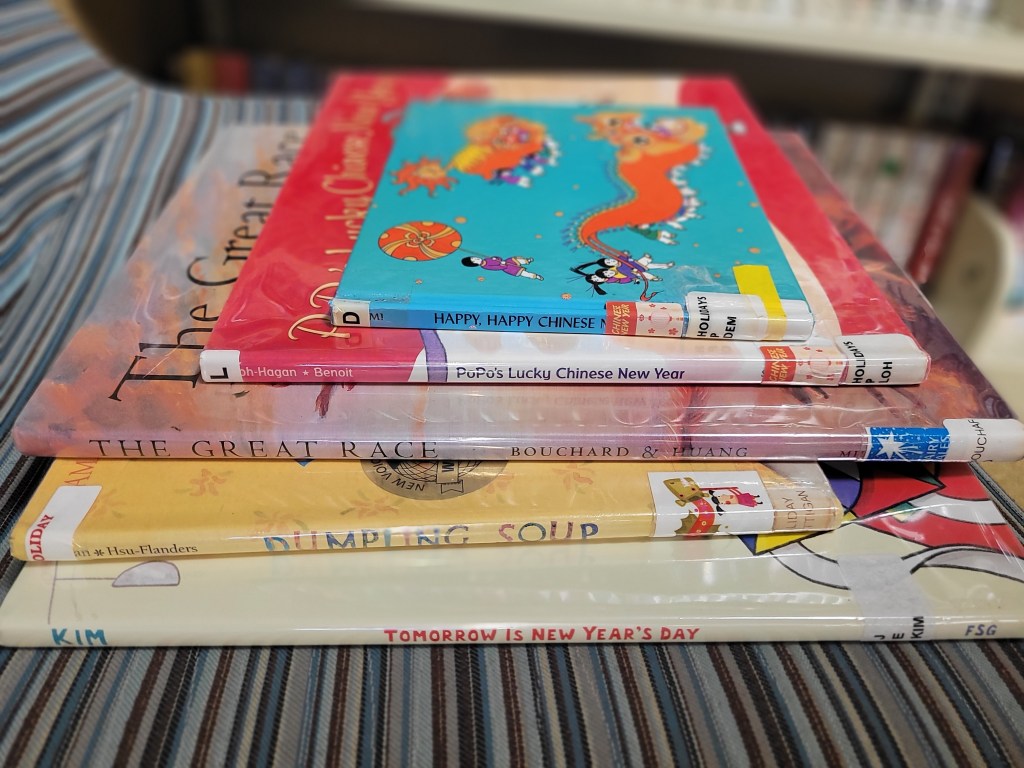
Our family usually always has a special dinner with relatives. While the Lunar New Year is celebrated in many countries throughout Asia, some traditions are similar. For example Chinese, South Koreans and Vietnamese all give out money envelopes, wear traditional clothes, and share a special meal with family. Outside of internet searches, I learned about various Lunar new year traditions from talking to friends and of course picture books.
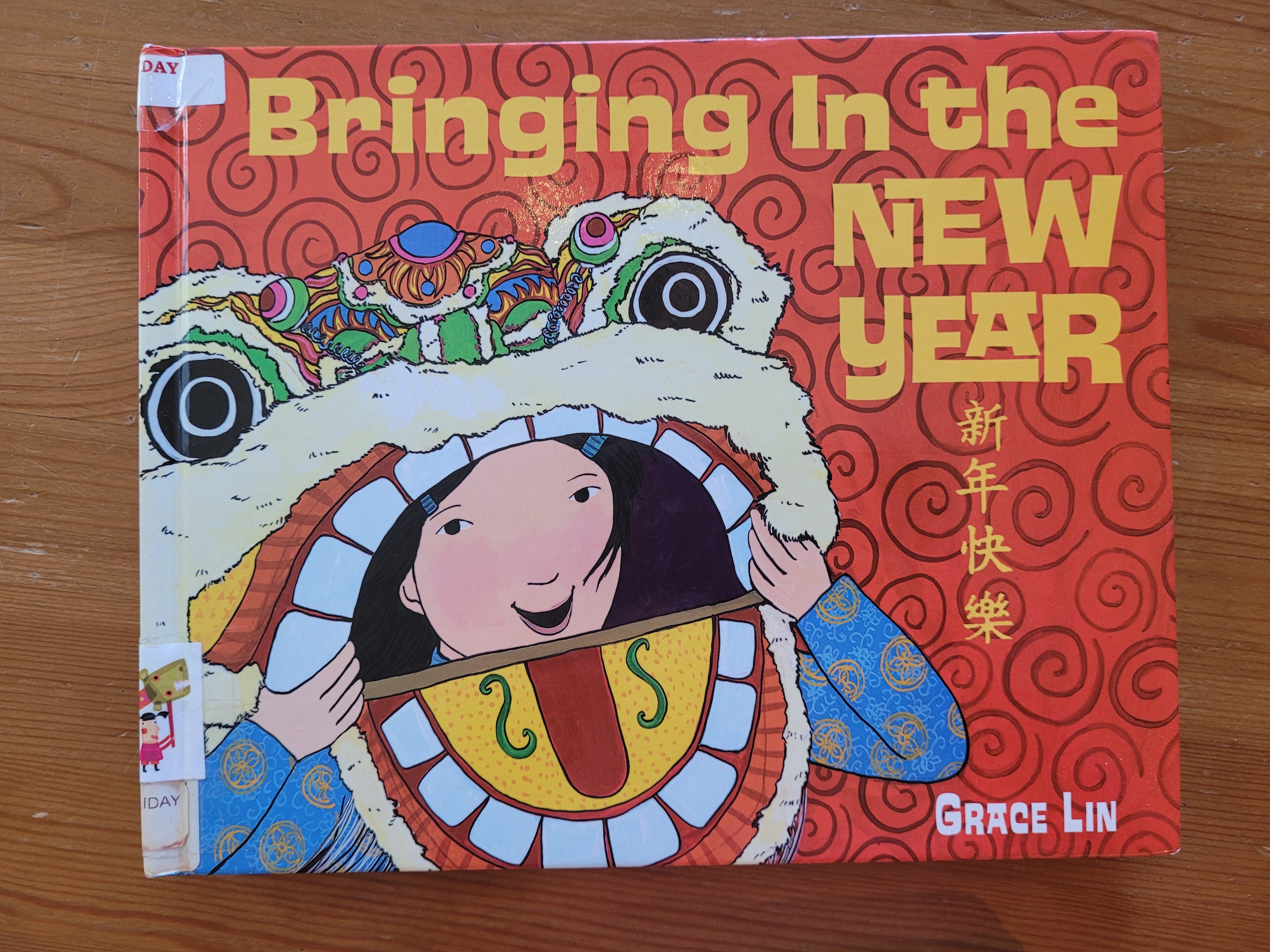
The first author I always go to for Asian holiday books is the Asian American author, Grace Lin. Her book, Bringing in the New Year is a simple explanation of Chinese New Year celebrations as a young girl and her sisters prepare for the new year. The girls get haircuts, help make traditional foods and put on qipao dresses. Grace Lin even has activity ideas and patterns for cutouts on her website. Paper cutouts are a common way to decorate during Chinese New Year.
Happy Chinese New Year! by Demi is a small book that goes through traditions around Chinese New Year. Demi is an American author who has retold and illustrated many Chinese fairytales and fables that were shared with by her husband when he told her about his youth in China. Our favorite of her books is probably The Empty Pot. Happy Chinese New Year! is full of Demi’s delightful illustrations of small children in colorful robes running around preparing for and celebrating the New Year. She even includes a list of dishes and what they signify. I also like how there is a part about visiting relatives and about the traditional candy tray brought on these visits.
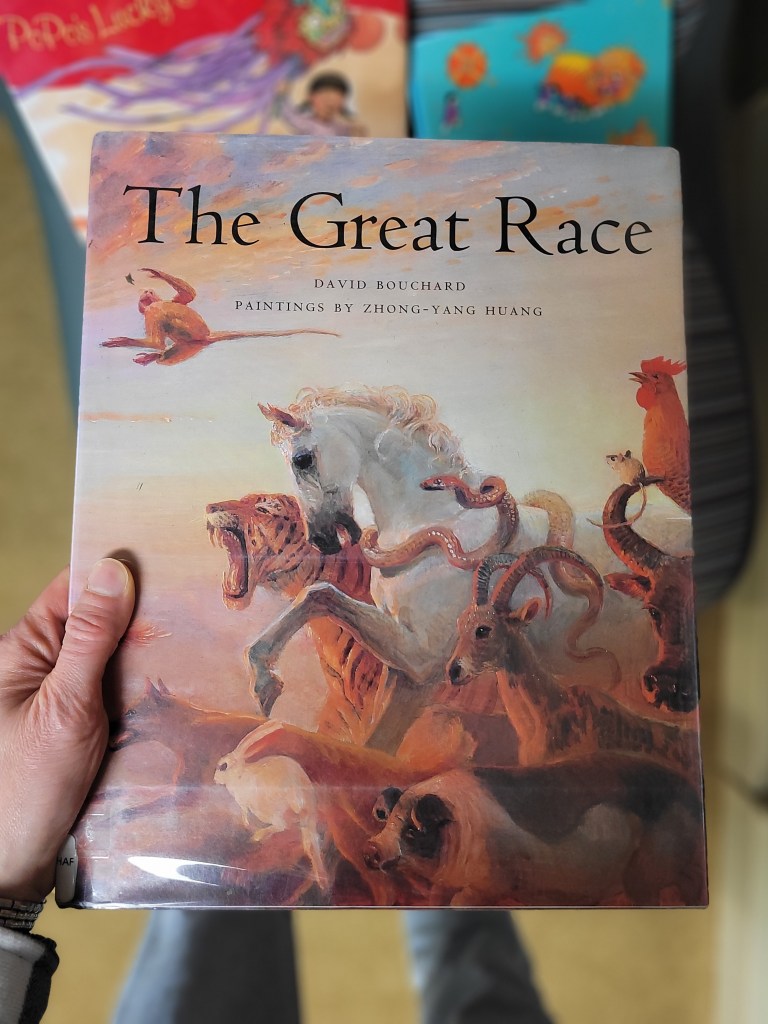
One book we usually revisit each year at the library is The Great Race written by David Bouchard and illustrated by Zhong-Yang Huang. This is a gorgeous retelling of the myth behind the Chinese zodiac. This book begins with a grandmother helping her granddaughter arrange cutouts of the zodiac animals and then telling her the story of the race to explain the order that the animals are placed in. The zodiac is important for the new year because each year represents an animal on the twelve-part zodiac calendar. The illustrations in this book are beautiful. The jacket note describes Huang’s style as a melding of Western influences with traditional Chinese painting and that description fits well. My kids are all very interested in the zodiac and learning about their own zodiac animals (your zodiac animal is the animal from the year in which you are born). For a while my daughter would introduce herself to kids at the playground and then follow it up with, “I’m a monkey for the Chinese zodiac! What’s your animal?” There were many confused children to say the least. (In the past my kids have enjoyed a fun Sagwa episode about the great zodiac race. Sagwa was a kid’s PBS show in the early 2000’s, based on Amy Tan’s picture book Sagwa the Chinese Siamese Cat.)
While there is a Korean version of the zodiac story it is not mentioned in Tomorrow is New Year’s Day: Seollal, a Korean Celebration of the Lunar New Year by Aram Kim. The book is a cute story about a girl preparing to share Korean Lunar New Year celebrations with her class. The girl and her mother show the class traditional dress (Hanbok) games and other new year’s traditions until her dad and brother arrive. Unfortunately, her brother does not want to wear his hanbok, but puts it on with encouragement from the other children. They all prepare tteokguk (a special new year’s rice cake soup). Traditionally, it is said that you become one year older after eating your soup. The book ends with a glossary about the Korean terms and traditions mentioned in the text. The glossary also includes pronunciation guides which are a nice bonus.
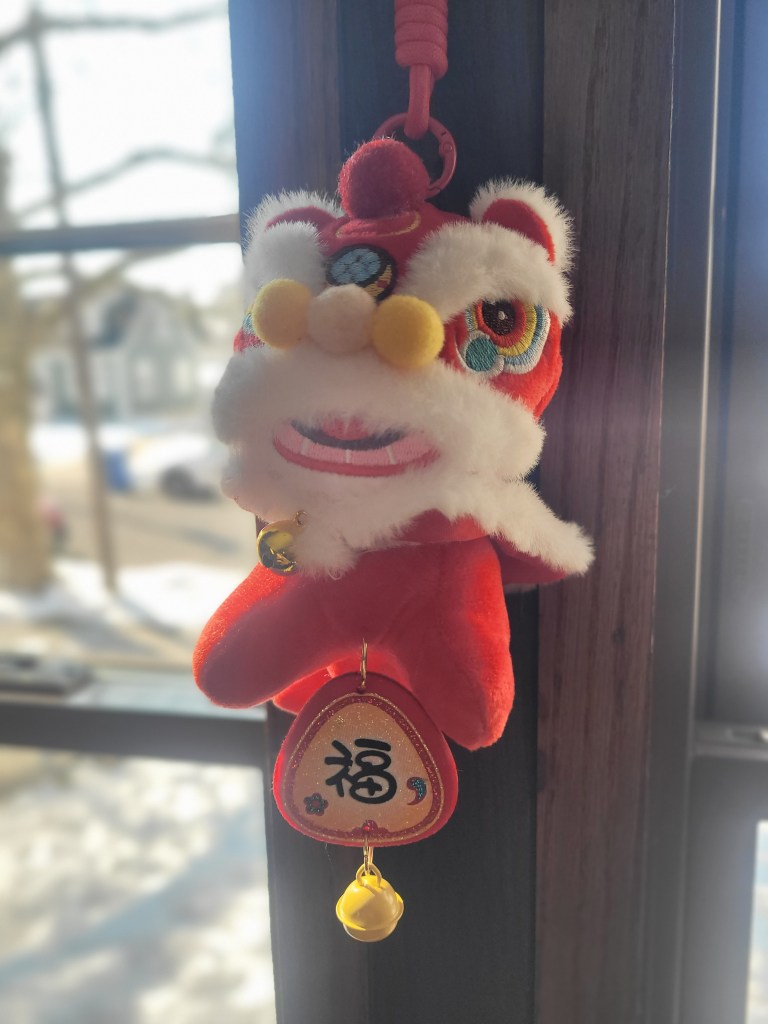
The next book I chose also teaches a lot of lunar new year traditions. It is PoPo’s Lucky Chinese New Year written by Virginia Loh-Hagan and illustrated by Renné Benoit. The story is about a little girl learning about Chinese New Year traditions from her Pópo (grandma). This book made me laugh several times as I read it outloud. The antics of the little girl in the story are quite cute. Every time she tries to get out of a New Year’s Eve chore her Pópo tells her she can’t put it off until the next day because then all the luck will be lost. The little girl then does double hard work to get even more luck. When told to wash her hair to get more luck on new year, she washes her hair three times, but her baby brother’s only one time, justifying that she needs more luck since she’s older. This book had a lot of great information tucked into the story, like the tradition of hanging the Fú (good luck) sign upside down (“Upside down” sounds a bit like the word “arrived” so when you hang the character Fú 福 upside down it is a play on words meaning luck or fortune has arrived). When the little girl learns that the number four is unlucky, she is so worried about her baby brother only having four baby teeth that she draws an extra tooth and attempts to tape it on so he won’t get bad luck. It’s nice to see her start to get along better with her “annoying” baby brother by the end. There is also a craft guide at the end of the book.
The next book is about another girl in a very different family helping her family prepare for the new year. Dumpling Soup by Jama Kim Rattigan and illustrated by Lilian Hsu-Flanders is interesting because it gives a different perspective of lunar new year celebrations. The author is a third generation Korean-American, born and raised in Hawaii. The girl in this story named, Marisa, is preparing to celebrate Lunar new year with her family (her family is Korean, Japanese, Chinese, Hawaiian and Haole [Hawaiian for Caucasian]). She helps her grandma make new year’s dumplings. All the aunties get together bustling in the kitchen to help prepare the dumplings. It is a family event. I love seeing how the family in this book blends all their different cultures together in their new year’s traditions.
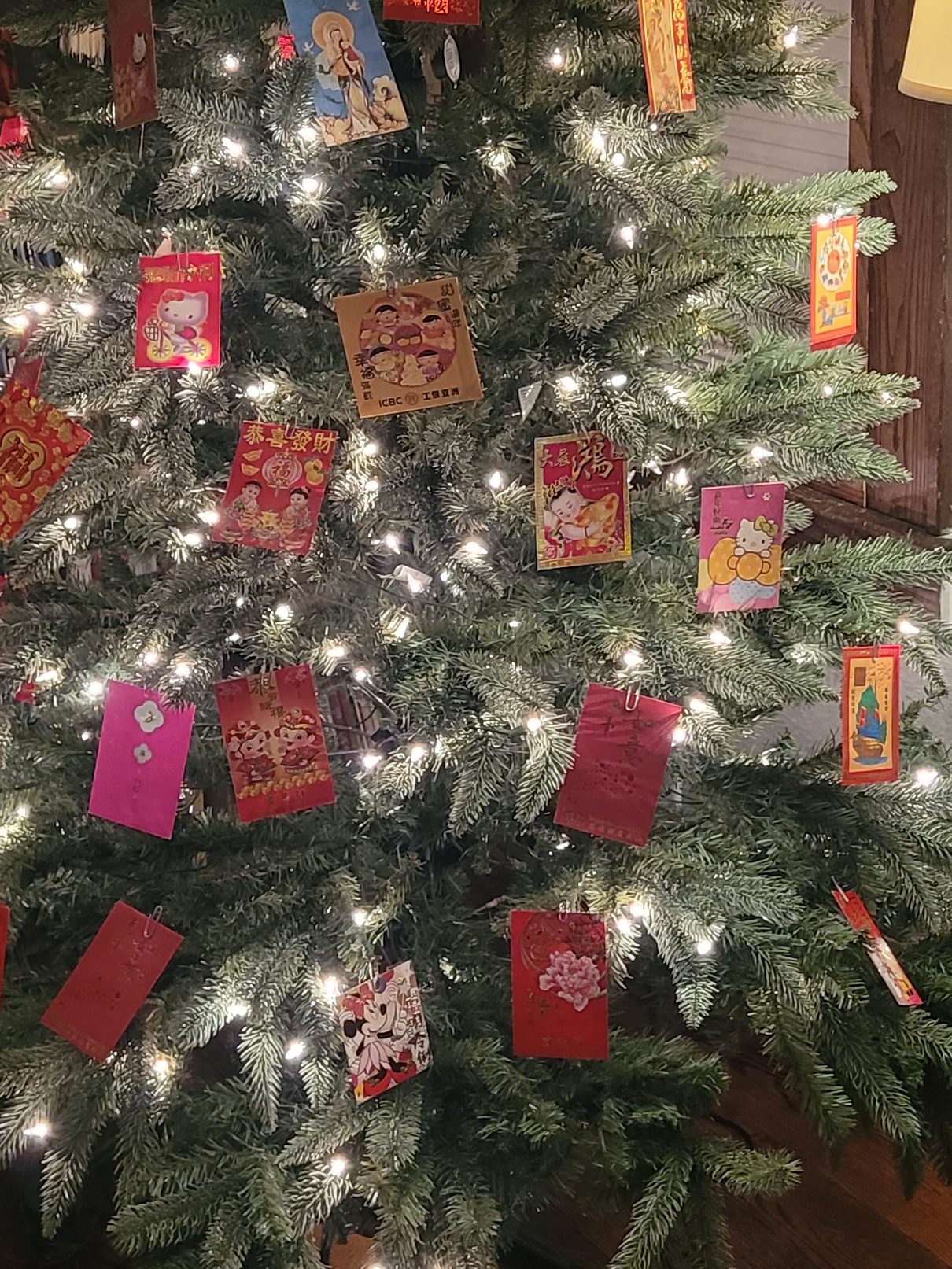
Our family has created our own traditions out of our blended cultures over the years. We usually always have a special dinner with family or friends to celebrate the lunar new year, we read lunar new year books, and do crafts. One year the Christmas tree was undecorated, but still up at Chinese New Year so I used paper clips and hung red envelopes on it as our Chinese New Year tree. We definitely had fun decorating that year! Sometimes the kids and I make our own decorations for the new year. This is always fun. When the kids were smaller, they would even wear traditional clothes for our new year’s dinner. Occasionally at other times in the year, they would find their new year’s outfits, put them on, and just go around the house in brocade jackets and pants all day. It was quite cute and made one zoom call in 2020 very memorable. How do you celebrate the lunar new year? Gong hei fat choy!
 More Bookshelves Please